Agentic browsing
Make your website easier for agents to use
Clear labels, stable pages and testable actions help both people and browser-based agents complete useful tasks.
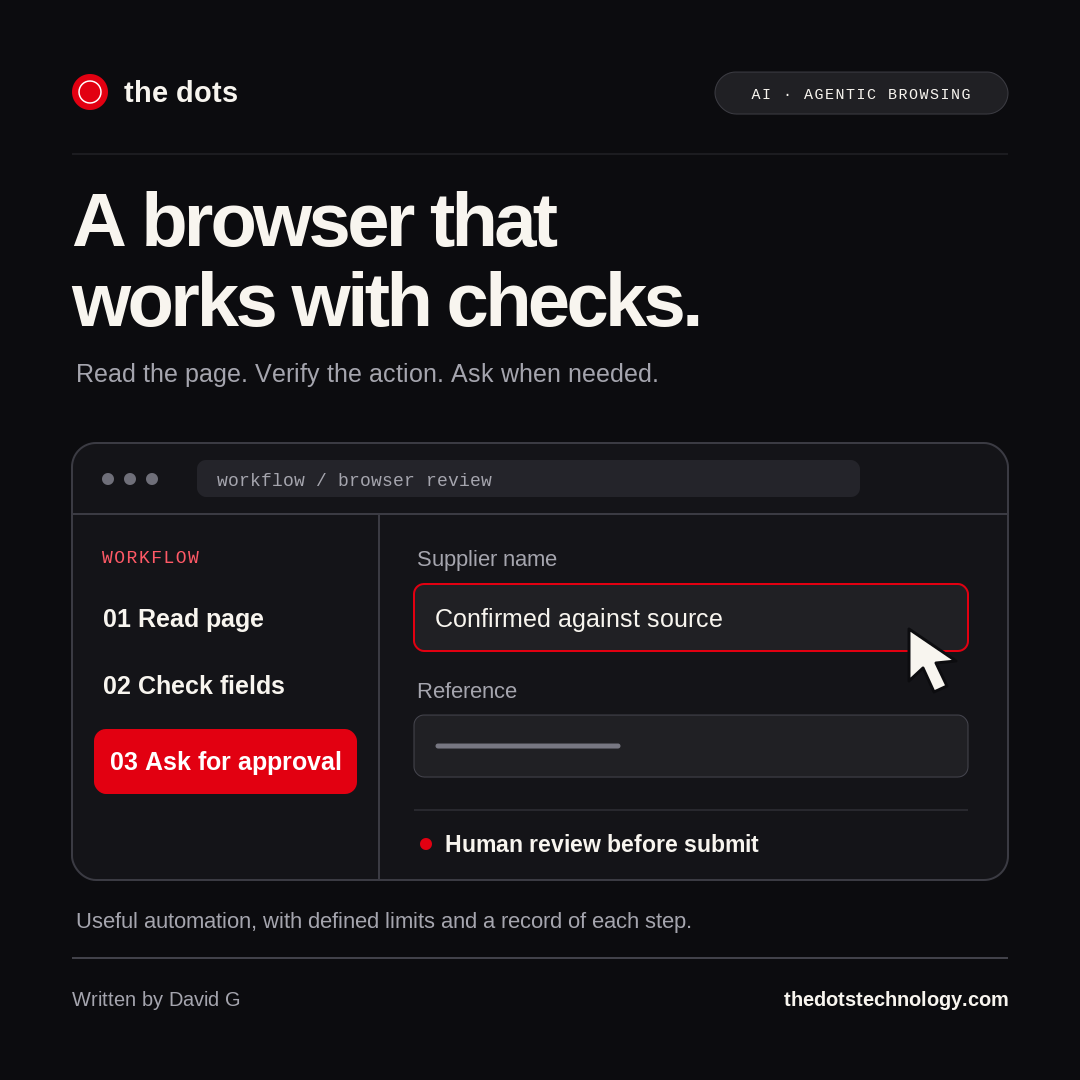
An agent using a browser still needs to understand the page in front of it. A button without a useful name, a form with unclear errors or a layout that moves during a click makes that task harder. Improving those details also helps the people who use the website every day.
Start with a journey you can check
Choose a small task: locate a tour, read its availability and prepare an enquiry. Define the intended outcome and the point where a person approves an external action. Use a test environment and synthetic records so the investigation does not create real bookings or send unintended messages. A successful demonstration should show the completed task and the evidence needed to review it.
Give controls an understandable structure
- Use descriptive links, buttons and form labels.
- Keep important content available in the page structure.
- Make errors explain the correction the visitor needs to make.
- Reduce unexpected layout shifts around interactive controls.
- Confirm consequential actions and record their outcome.
Treat emerging audits as evidence, not a promise
Chrome's Lighthouse documentation describes the Agentic Browsing category as experimental. Its current reporting uses readiness checks and pass ratios, rather than a weighted score out of 100. WebMCP-related capabilities are based on proposed standards and have additional availability requirements. Check the browser and tooling versions for the environment you intend to support before making them part of a delivery commitment.
Keep a trace of what happened
Browser testing tools can make a failure easier to investigate. Playwright Trace Viewer lets a developer inspect a recorded test, including actions and page snapshots. We use that kind of evidence alongside expected outcomes: what did the agent identify, which control did it use, and what did the application confirm?
A site can become easier to operate without giving an agent unrestricted authority. Start with readable pages and controlled tasks, add tool interfaces where they solve a real problem, and keep approvals explicit. The useful result is a journey your team can reproduce and understand.
Sources & further reading
About the author
David G
Writing at The Dots Technology about software, search, analytics and practical AI for business.
Connect on LinkedInPut this into practice
See how we approach the work, with an interactive walkthrough and a clear delivery plan.