Indexing2 min read
Investigate a page that is missing from search
Use URL Inspection, technical checks and a clear change log to understand what is keeping an important page out of view.
Search & performance
A structured investigation into crawling, canonical URLs and the pages you want search engines to understand.
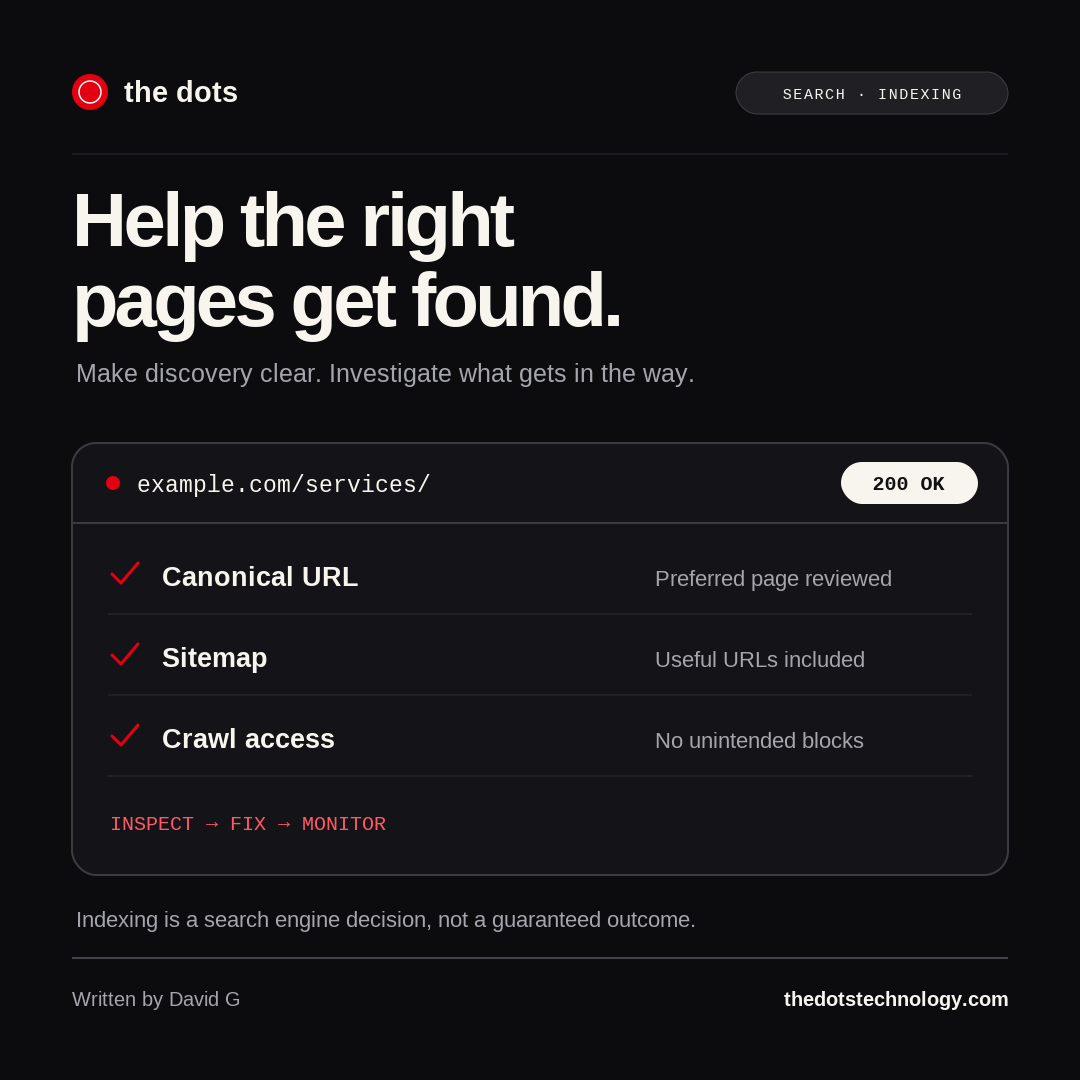
SEARCH PREVIEW · EXAMPLE
A service page with a clear purpose, an accessible address and useful links.
Search engines decide what to include. This example shows the work we control, with no ranking or indexing guarantee.
The investigation compares the intended public URL with the available Search Console status.
inspect priority URL → read exclusion reasonThe difference it makes
When an important page is missing from search, submitting it repeatedly rarely explains the cause. We inspect the page, its discovery paths and Google's available evidence, then fix the site issues that are within your control.
A clear distinction between expected exclusions and problems
Prioritised fixes for important public pages
An evidence-based follow-up process after changes
From the first check to handover
Explore the walkthrough above, then see what each stage means for your project. We agree the scope and checks with your team before work begins.
We agree which pages should be public, useful and eligible for search, and which exclusions are intentional.
We compare URL Inspection findings with the page's response, directives, internal links and canonical signals.
We fix unintended blocks, inconsistent URLs or inaccessible content, then validate the changed pages.
Where appropriate, we request a recrawl or update the sitemap and monitor Google's later processing.
What you take away
You can see what was changed, how it was checked and what your team needs to look after next.
Before we begin
There is no guaranteed timetable or inclusion. Google decides whether and when to crawl and index a page. We show the completed site-side work and monitor the evidence that becomes available.
No. Duplicate addresses, redirecting URLs and private or low-value utility pages may be intentionally excluded. The goal is to make useful, canonical public pages eligible and discoverable.
Connect this with
Related reading
Practical articles by David G, selected for Search indexing.
Use URL Inspection, technical checks and a clear change log to understand what is keeping an important page out of view.
Before publishing more pages, check whether search engines and real customers can reach, read and use the pages you already have.
Clear answers, credible evidence and consistent business information are a stronger foundation than promises of guaranteed AI mentions.
Your next step
Tell us about your idea or the part of your business that needs to work better. We'll help you find a clear next step.
Have a detailed brief? Use our full contact form.